Issue No. 8 · Saturday editionAwaiting editor approvalSaturday, November 21, 2026 · America/New York
Lead story · United States, with worldwide impact · November 20, 2026
Nvidia’s stock sinks 14%, ending its longest losing streak since 2008
Shares of the world’s best-known AI chipmaker tumbled on Friday after Reuters reported that U.S. regulators are examining its accounting, the latest blow since its co-founder quit as CEO earlier this month.
The Tech Page staff · Issue No. 8 draft · Source-checked November 21, 2026
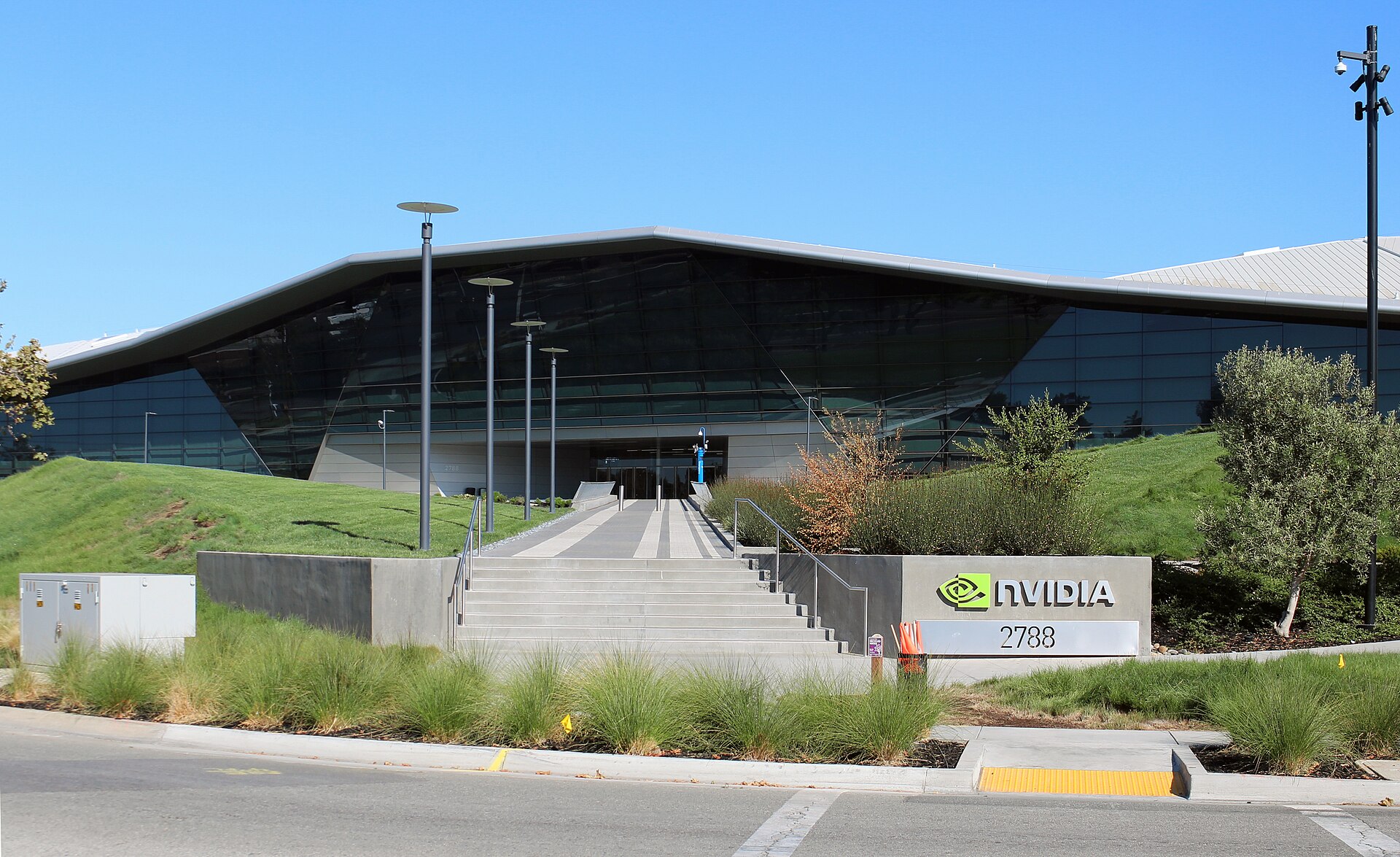
Nvidia’s headquarters in Santa Clara, California, photographed in August 2018. This is not a photo from this week.
On Friday, November 20, Nvidia’s stock fell 14%, its seventh losing day in a row, CNBC reports. It was also the stock’s seventh straight losing week, the longest such run since 2008, during the global financial crisis. Over those seven weeks, Nvidia’s shares have lost 46% of their value, wiping out about $2.6 trillion. Nvidia’s chips power most of the world’s AI systems, and it was once the most valuable company on Earth. At about $3 trillion, CNBC says, it now ranks fourth, behind Apple, Microsoft, and Alphabet.
The drop sped up after Reuters reported, citing two people briefed on the matter, that staff at the Securities and Exchange Commission (SEC), the U.S. agency that polices the stock market, are looking into possible accounting problems at Nvidia. Accounting is how a company counts and reports its money. The stock was down more than 6% before the report and about 13% after it, according to Reuters. Reuters could not find out exactly what the SEC is examining or when the inquiry began, and it points out that investigations are not proof of wrongdoing; many end with no action at all. The SEC declined to comment, and Nvidia did not immediately respond. Reuters notes renewed press attention on a change Nvidia made last year to how it reports where its sales come from, which removed Singapore from its breakdown even as, the Financial Times reported, Singapore sales grew to almost half of Nvidia’s revenue.
The pressure is coming from several directions. On Thursday, California Attorney General Rob Bonta served Nvidia with an investigative subpoena, a legal order to hand over information, asking whether its advanced chips or confidential information may have reached China and whether the company misled investors. Jensen Huang, who co-founded Nvidia and resigned as CEO on November 12 after reports of affairs, including one with a woman U.S. authorities suspect is a Chinese spy (China denies she is a spy), will testify in public before the Senate Banking Committee, a spokesperson for its chair, Sen. Tim Scott, said Friday. No date has been set; Huang has also agreed to a closed-door interview with three House committees on December 1. The selling spread around the world: Japan’s SoftBank fell 14.5% on Friday, its worst day since August 2024, and South Korea’s main stock index dropped 5.2%, CNBC reports. Back in New York, Anthropic, which had a strong first day of trading on Thursday, fell 8.5% on its first full day.
Join free to read the full articles. You also get the day’s lead story, headlines, and a weekly roundup by email, plus The Daily Word and the tech calendar. It is free. This form does not send your details anywhere; this device only remembers that you joined, and your first name.
The daily lead story, by email each morning
The day’s headlines from around the world
A weekly roundup
The Daily Word, tied to that morning’s news
The tech calendar of upcoming events
More stories
From Issue No. 8 · November 20–21, 2026
Worldwide · AI and privacy · November 20
Signal starts blocking screenshots to keep phone AI assistants out of your chats
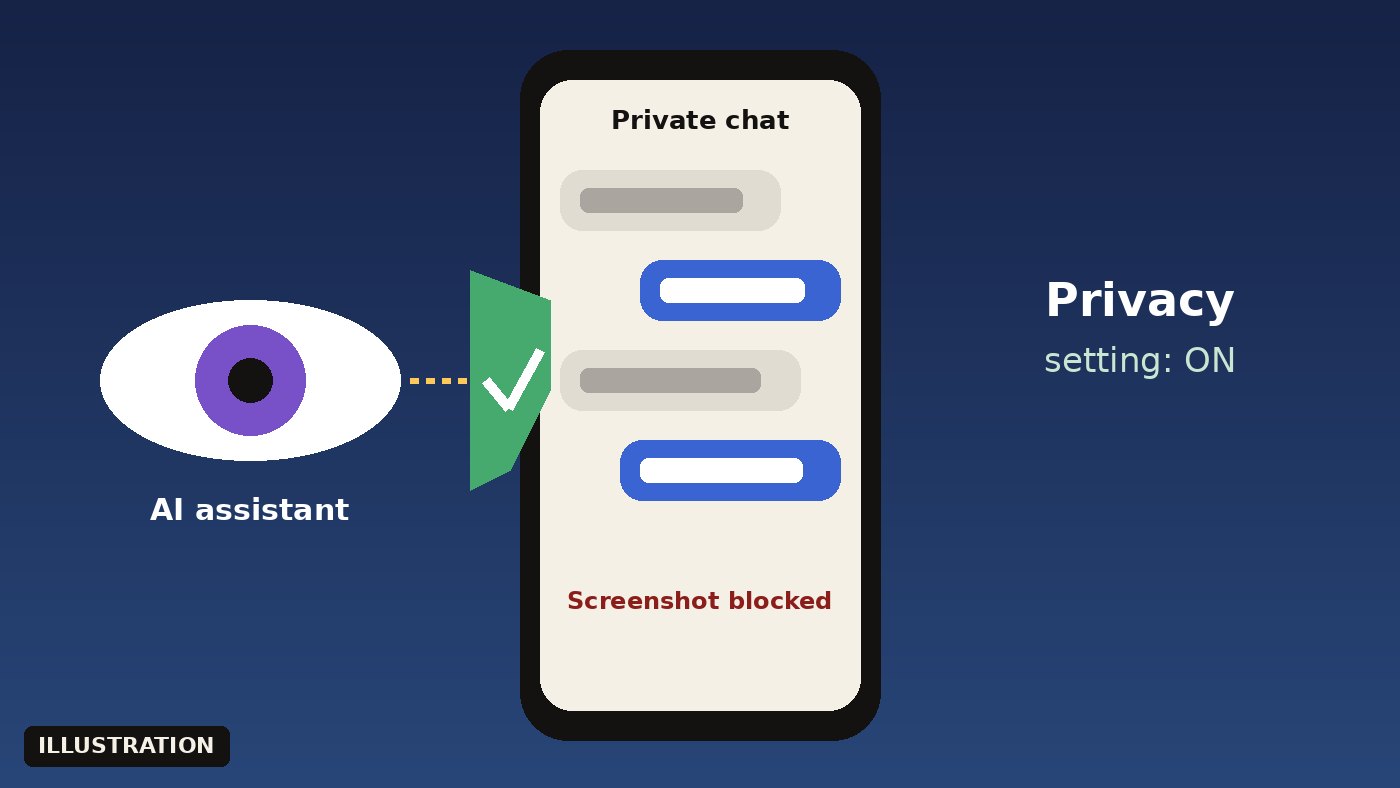
Signal, the encrypted messaging app, now blocks screenshots inside the app by default on iPhones running iOS 27, and on Android phones it switches the same protection on automatically the first time it detects an AI assistant trying to read the screen. The reason: new AI assistants built into phones, such as Google’s Gemini and Apple’s Siri, can “scan” whatever is on your screen so they can answer questions about it. Signal president Meredith Whittaker wrote that this captures people’s private messages and puts them outside Signal’s control. While the setting is on, it also blocks screen recordings and hides Signal from the recent-apps view. You can turn it off, or pause it for 10 minutes to grab a quick screenshot, but Signal warns that doing so could let AI assistants read your and your friends’ messages. Whittaker admits the fix is “incomplete” and is asking Apple, Google, and Microsoft to give app makers better tools. It doesn’t change how messages are encrypted.
Illustration: a generic phone and chat, not Signal’s app.
An Anthropic mathematician says he and Claude proved math’s most famous unsolved problem
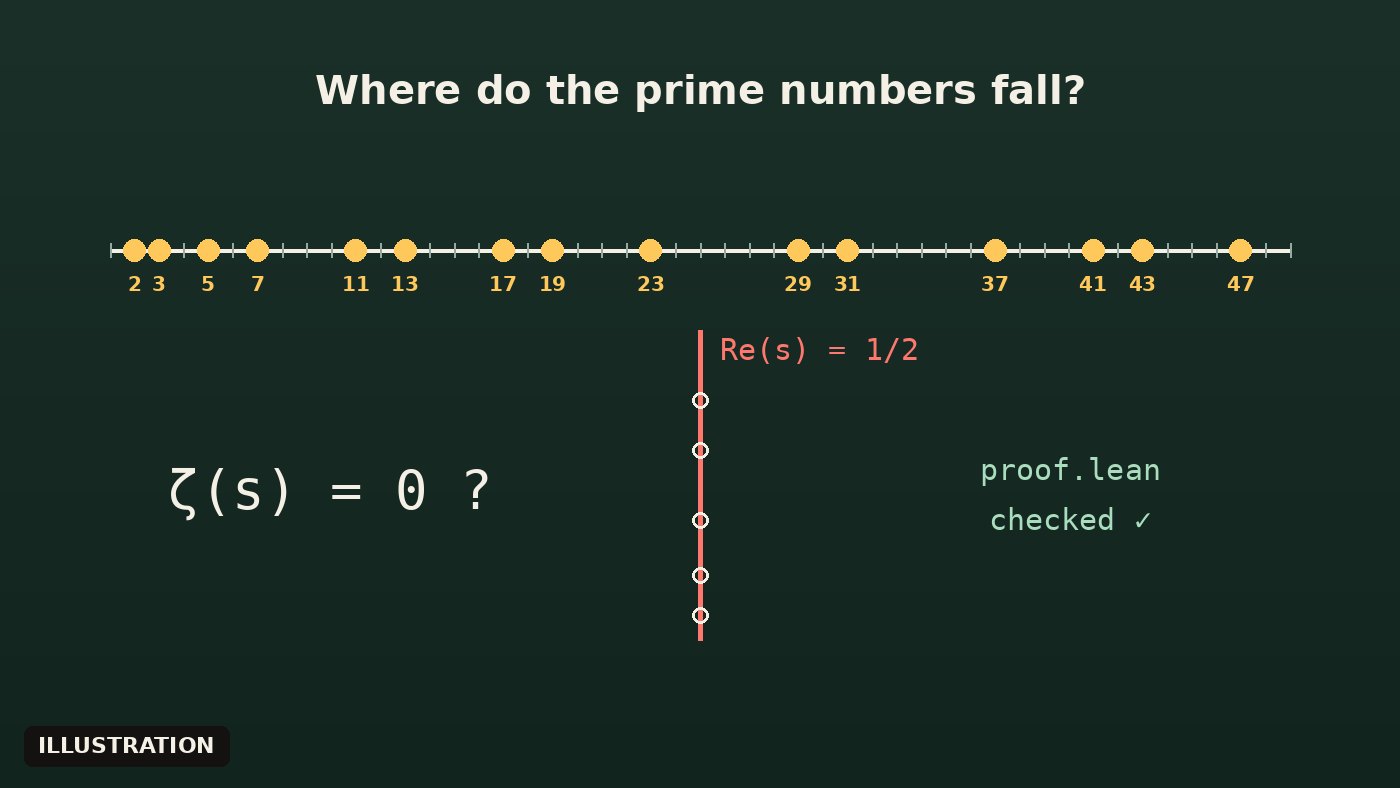
Levent Alpöge, a mathematician who works at Anthropic, posted what he says is a proof of the Riemann hypothesis, found while working with the company’s Claude AI. First proposed by Bernhard Riemann in 1859, the hypothesis predicts a hidden pattern in how the prime numbers (numbers divisible only by 1 and themselves) are spread out. It is one of seven Millennium Prize Problems, which each carry a $1 million reward. Alpöge wrote his proof in Lean, a programming language that lets a computer check every step. Independent mathematicians, including MIT’s Andrew Sutherland, say the code compiles and passes their checks. “Honestly the chance that anything is fishy here is approximately zero,” Sutherland told Scientific American. Still, final checks that the code proves exactly the right statement were still running Saturday morning, and humans have yet to understand and explain the proof. Not confirmed yet: the prize rules require publication and two years of scrutiny. The same day, Stanford’s Ravi Vakil posted a separate, all-human draft proof by postdoc Alessandro Masullo that has not been verified.
Illustration: a simple picture of prime numbers, not the actual proof.
Samsung picks new leaders for its memory-chip and Galaxy phone businesses
Samsung Electronics announced Friday that Sang Joon Hwang, who led development of its memory chips, including DRAM and HBM (the fast memory stacked next to AI processors), has been promoted to president and will run its Memory Business. Won-Joon Choi, who led this year’s Galaxy S26 and Galaxy Z Fold8 launches, will head Mobile eXperience, the unit that makes Galaxy phones. Sangyeun Cho will lead System LSI, which designs chips such as phone processors and camera sensors, and Jong Myeong Lee becomes chief technology officer of the chip division. The company’s two co-CEOs, Young Hyun Jun and TM Roh, stay in their jobs. Samsung says the changes are meant to make its chip business more competitive. The shake-up came the same day Samsung’s stock fell about 7% in Seoul as the global AI chip sell-off hit South Korea, CNBC reports.
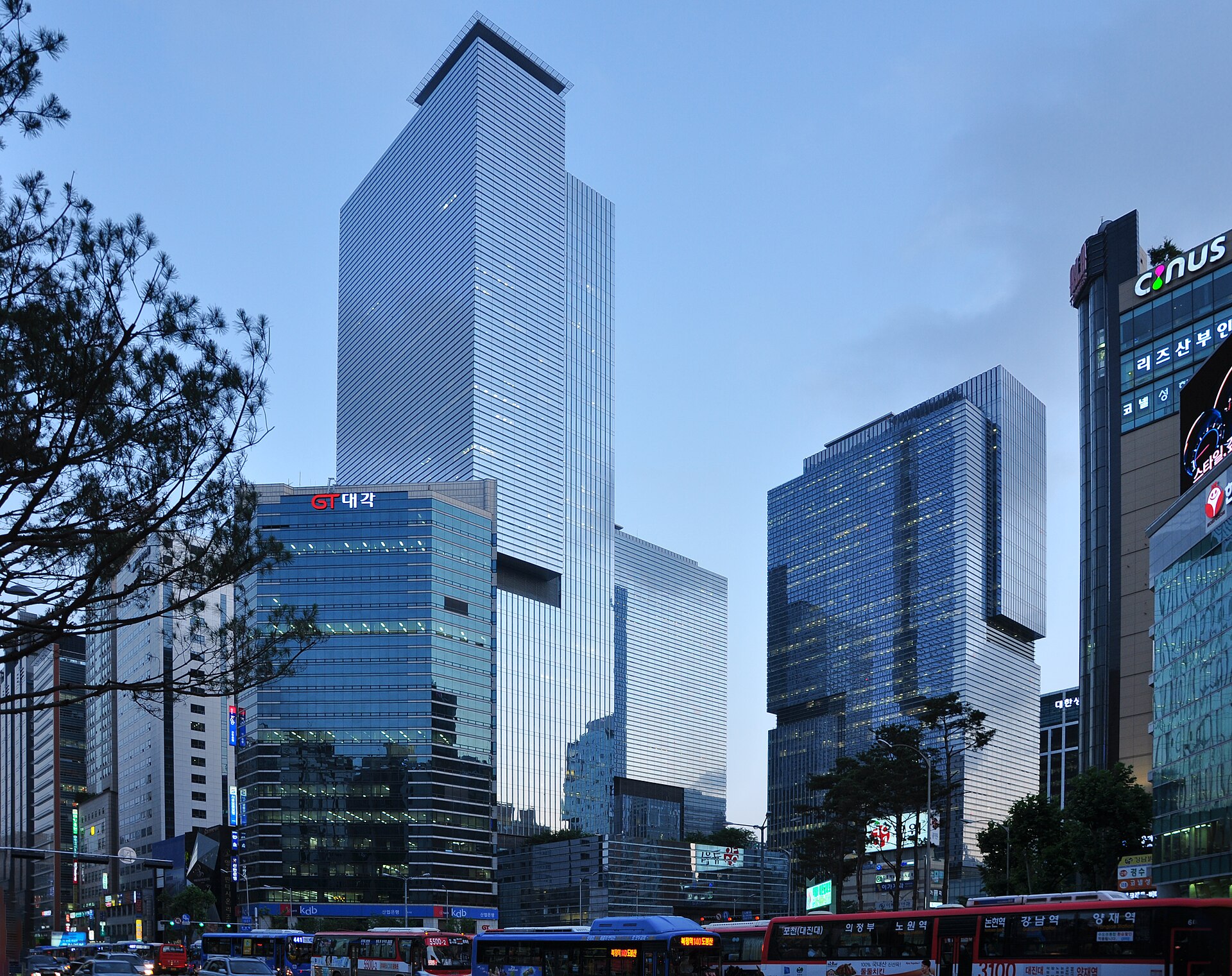
Photo: Samsung headquarters; not a photo from this week. Oskar Alexanderson / Wikimedia Commons (CC BY-SA 2.0).
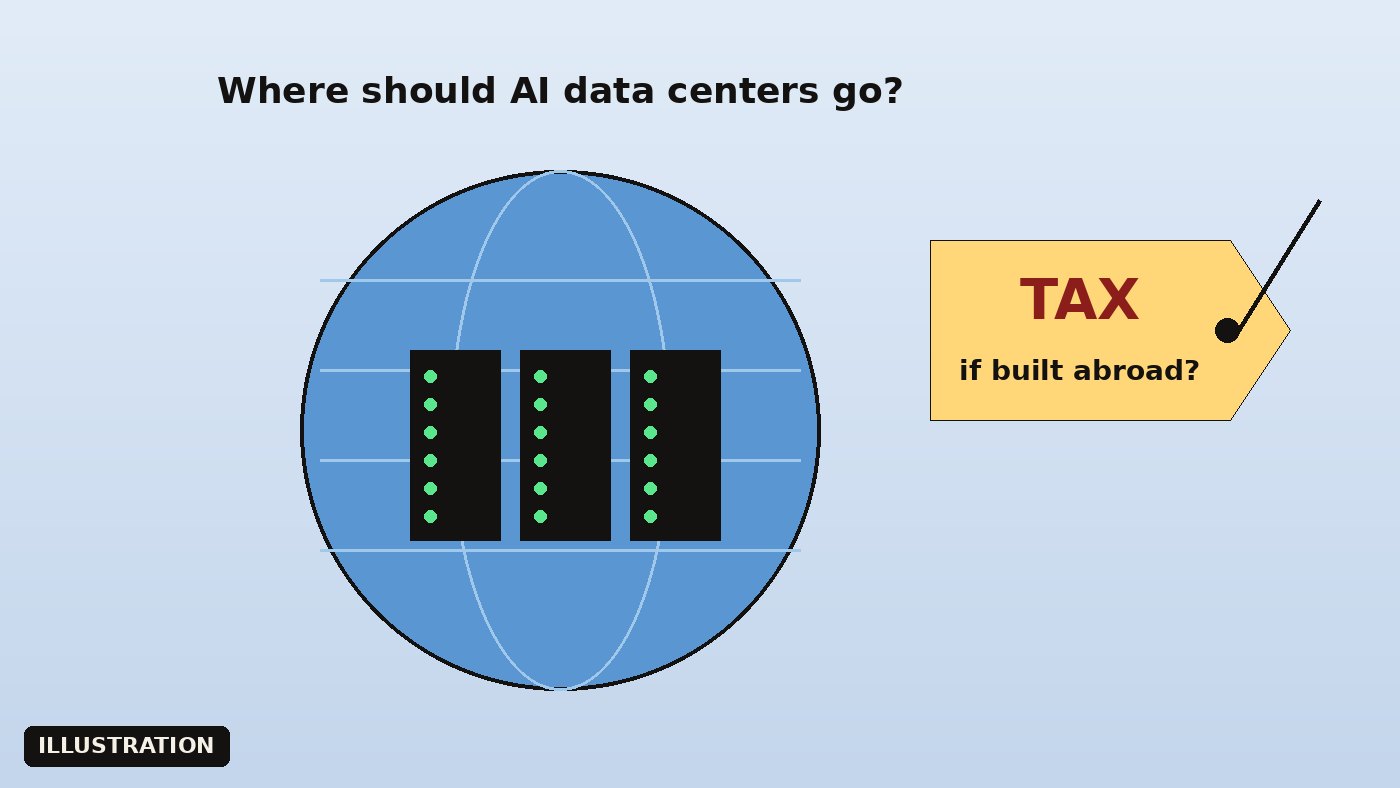
Trump threatens a “tremendous tax” on U.S. companies that build data centers abroad
At a White House news conference on Friday, President Trump said U.S. companies will be banned from building data centers in other countries, and that if they do, “we’re going to put a tremendous tax on them.” He said he had not yet told his own staff, and no written policy or details have been released. Alphabet, Amazon, Microsoft, Meta, and Oracle already run data centers abroad, often to serve nearby customers or follow local laws; Amazon, Google, Microsoft, and Oracle did not immediately respond to CNBC. Many Americans don’t want the buildings nearby: in a CNBC survey, 64% of registered voters opposed an AI data center within 10 miles of their home. Europe, meanwhile, wants more of them. In Frankfurt, European Central Bank President Christine Lagarde said EU public money should take the first losses on big chip-plant and data-center projects to attract private investors, citing an estimate that raising Europe’s share of world AI computing power from about 5% to 15% by 2030 would cost around €1.3 trillion.
Illustration: a simple graphic, not a real building or policy document.
A startup sues Apple in India and asks a court to block iPhones with NameDrop
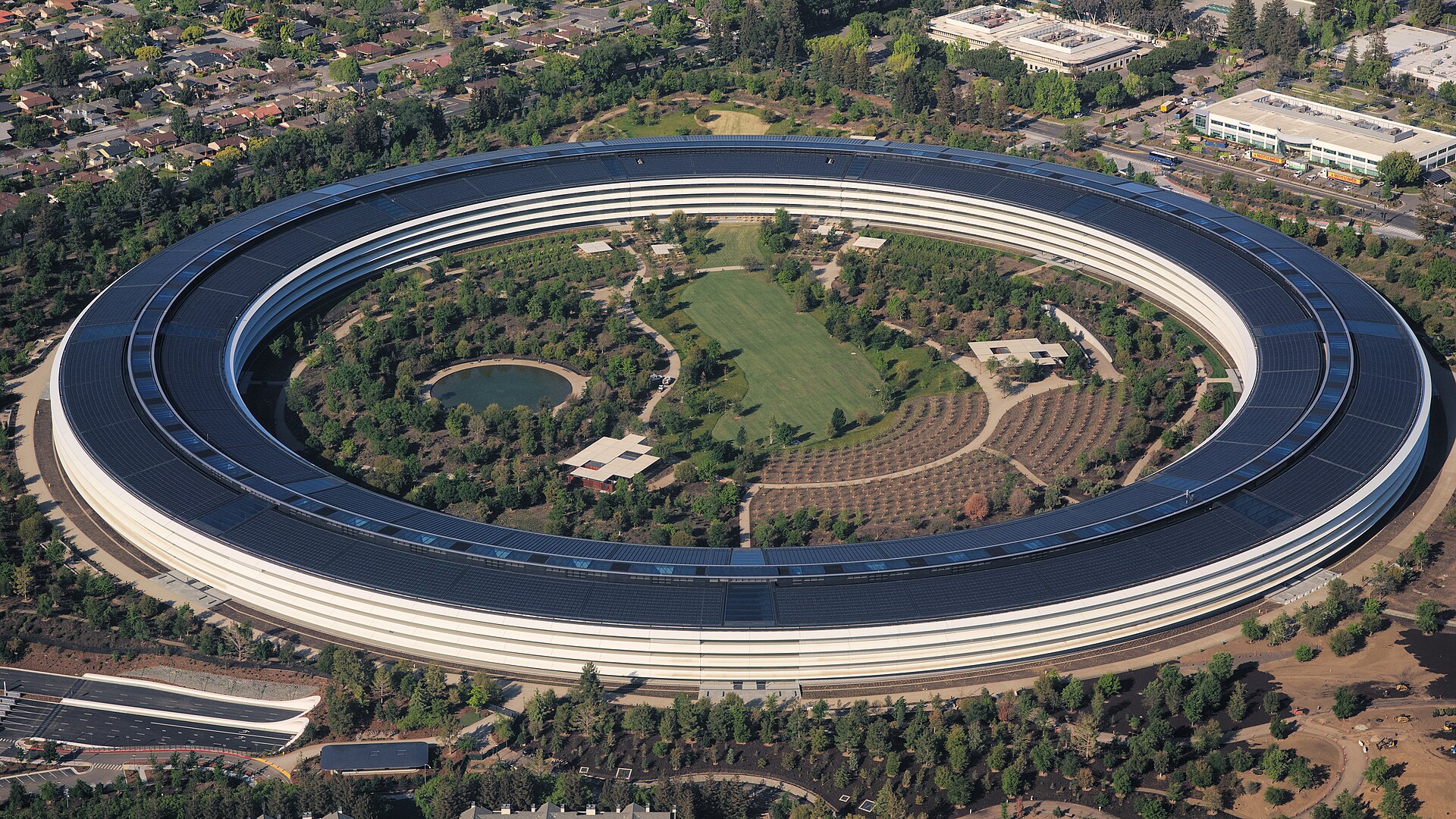
GG Technologies, a Santa Monica, California, startup that makes StayTouch, an app for swapping contact details by holding phones close together, has sued Apple in India’s Bombay High Court, TechCrunch reports. It says Apple’s NameDrop, the iPhone feature that shares your contact card when you bring two devices together, copies technology covered by its Indian patent. The company wants ₹15 billion (about $162 million) in damages and is asking the court to stop Apple from selling or importing iPhones and Apple Watches with NameDrop in India. These are the startup’s claims, and no court has ruled; the case hasn’t been scheduled for a hearing, and Apple didn’t respond to TechCrunch. The startup is also fighting Apple in the U.S., where the International Trade Commission opened an investigation in August. India matters a lot to Apple as a place to sell iPhones and build them, though iPhones are still less than 10% of smartphones shipped there.
Photo: Apple Park in Cupertino, California, from the air; not a photo from this week. Daniel L. Lu / Wikimedia Commons (CC BY-SA 4.0).
A transcription company left police interviews and body-cam video open on the internet
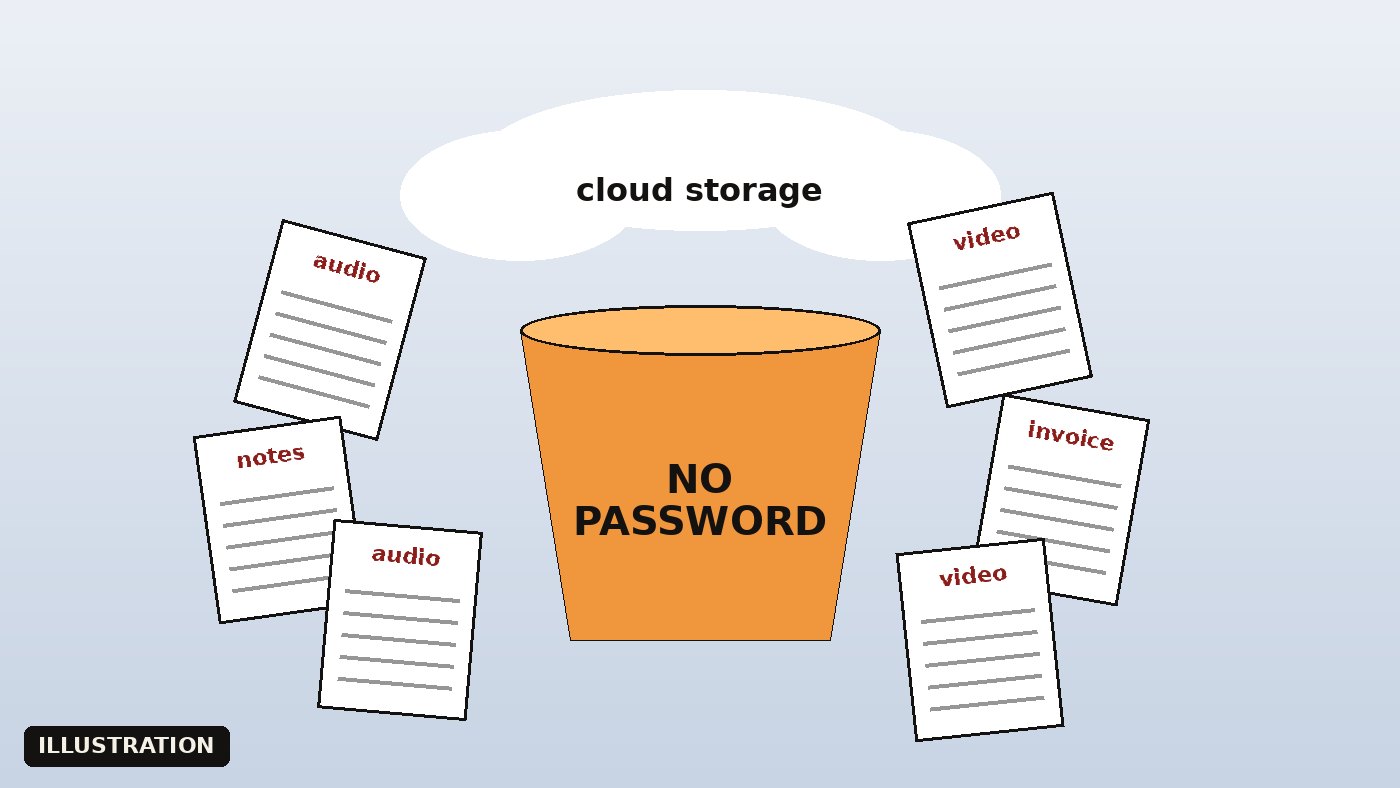
Tigerfish, a San Francisco company that turns recordings into written transcripts for police departments, prosecutors, government agencies, and tech companies, left a large pile of files on an Amazon cloud server that anyone could open, with no password, TechCrunch reports. The files included transcripts of police interviews, body-camera footage, customers’ raw audio and video, and invoices naming police and prosecutors’ offices. Security researcher Anurag Sen found the data in October and emailed the company but heard nothing back; Tigerfish later said his email landed in its spam folder. After TechCrunch contacted it, Tigerfish blocked public access and said its other storage is locked down too. It is not clear whether customers have been told. Sen says most leaks like this come from simple human mistakes, like an engineer switching off a password to test something and forgetting to turn it back on.
Illustration: a generic picture of exposed files, not the company’s systems.
United Kingdom · Startups and energy · November 20
Spotify’s founder backs a fusion startup started by an AI researcher
Daniel Ek, who founded Spotify, is backing Europa Fusion, a secretive U.K. startup that wants to build a fusion power plant, TechCrunch reports (Bloomberg reported it first). Fusion is the process that powers the Sun: squeezing atoms so hard that they merge and release energy. Europa Fusion plans to use “pulsed power,” which fires huge, perfectly timed bursts of electricity to crush a tiny fuel target. Its founder, Nantas Nardelli, worked in AI at Google DeepMind, Facebook AI Research, and Microsoft Research, then led machine learning at the U.S. fusion startup Pacific Fusion. Rather than leaning mostly on building and testing big machines, he wants to rely more on computer simulations and data, according to a source familiar with his thinking. No one has yet built a fusion plant that sends power to the grid, but if it works, fusion could provide carbon-free electricity, which could also help with AI’s huge energy needs. How much Ek invested was not reported.
Illustration: an artist’s idea of a pulsed-power fusion shot, not the company’s design.
Google will shut down the Nest app and replace Google Assistant on smart speakers
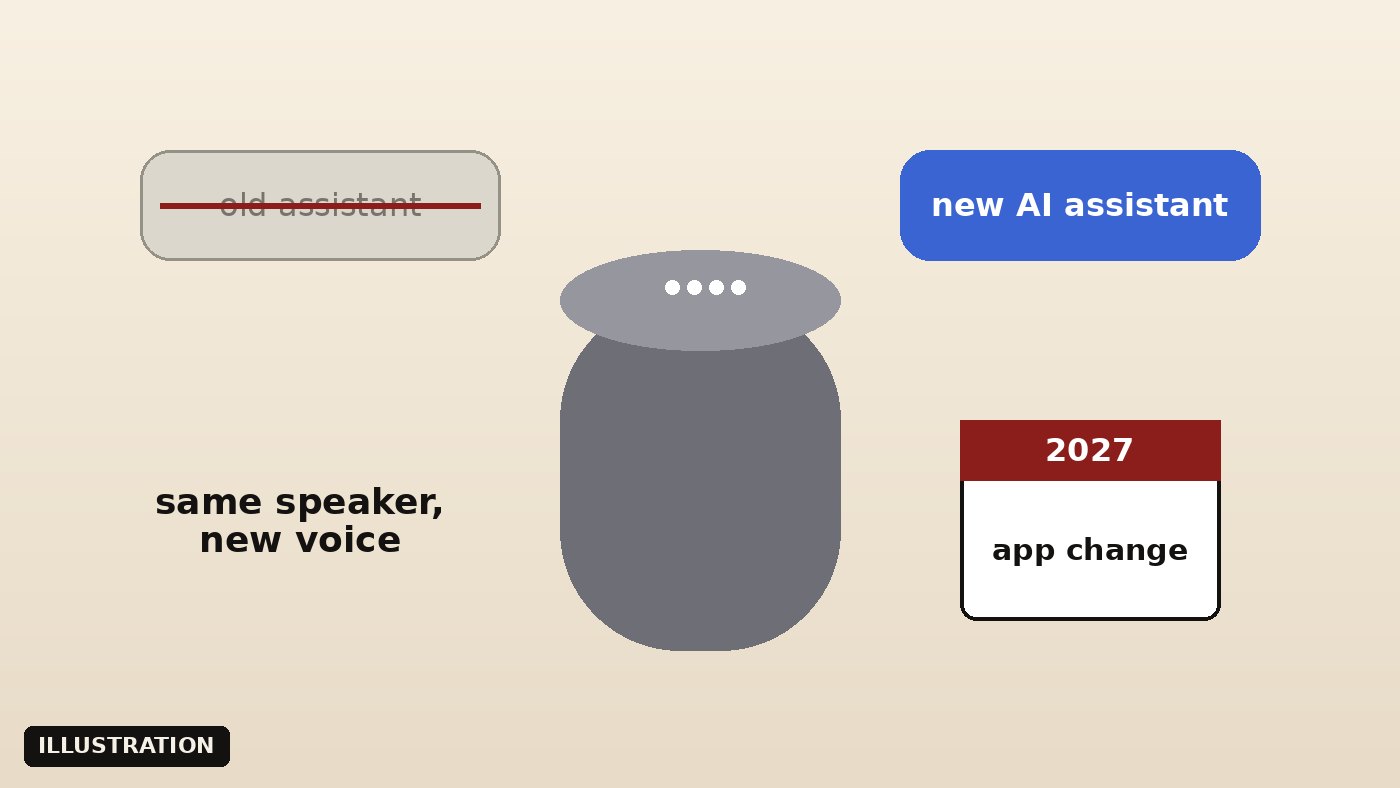
If your family uses Google smart-home gear, changes are coming. Google says it will retire the Nest app on January 25, 2027. After that, Nest thermostats, cameras, doorbells, and smoke alarms will be controlled from the Google Home app, and Google will move devices, settings, and camera video history over automatically on that date. Custom video clips you saved yourself won’t move, so Google says to download them from home.nest.com before then. On August 2, 2027, Google will replace Google Assistant on its speakers and smart displays with Gemini for Home, an AI assistant that Google says understands more natural speech and harder questions. Google says every device that works today will keep working. Google’s older Nest Aware subscription will switch to Google Home Premium, and the company says it will start deleting Nest account data on March 25, 2027, The Verge reports.
Illustration: a generic smart speaker, not a Google product.
Report, not confirmed: YouTube has agreed “in principle” to pay $3 billion to thousands of U.S. school districts that say its “addictive design” harmed kids, and to add new safeguards for teens, Bloomberg reported, according to The Verge. Google didn’t immediately comment. The Verge, citing Bloomberg
Report, not confirmed: Cybersecurity giant CrowdStrike is in talks to buy rival Zscaler, Bloomberg reported. Zscaler’s stock jumped 18% in after-hours trading and CrowdStrike’s fell more than 8%; CrowdStrike declined to comment. CNBC, citing Bloomberg
Grand Theft Auto VI was so big it broke the internet, almost: Comcast says November 18, the day before the game launched, was the busiest day in its network’s history, with peak traffic 31% above a normal day, and the 200GB-plus game made up as much as 24% of all its traffic at peak times. The Verge, citing Comcast
Sean Cairncross, the White House’s national cyber director, is stepping down after a week of tech outages at companies and government agencies. Kirsten A. Davies, the Defense Department’s chief information officer, will fill in. The Verge
Etsy says it will revise its new AI policy after a backlash from sellers, who make and sell handmade goods on the site, and will share the new terms with them soon. The Verge, citing The New York Times
Coming up: a SpaceX Falcon 9 launch from California this morning, Saturday, November 21 (window opens 7:30 a.m. ET); Dell earnings Tuesday, November 24; AWS re:Invent from November 30; Jensen Huang’s closed-door House interview December 1; and Nothing’s new screen-free AI gadget on December 8. See the Calendar. The Verge (Nothing)
Photographs are stored in the local images/ folder and were chosen because they are officially published or released under a Creative Commons or public-domain license. Captions state when a picture is from an earlier date or a different place than the news event. Generated images are labeled “Illustration” and are not photographs of real events, products, or people.
Hero, Nvidia headquarters, Santa Clara (August 4, 2018): Coolcaesar / Wikimedia Commons, CC BY-SA 4.0. Reused from earlier issues; not a photo from this week.
Samsung headquarters: Oskar Alexanderson / Wikimedia Commons, CC BY-SA 2.0.
Aerial view of Apple Park: Daniel L. Lu / Wikimedia Commons, CC BY-SA 4.0.
Screen-shield, prime-number, data-center, open-bucket, fusion, and smart-speaker images: illustrations made for this draft, each labeled “Illustration.”